
Trust & Support
Certificates
Comprehensive certificates and export documentation for Santai Maidong international supply: COA, origin docs, fumigation, phytosanitary.
Ophiopogon root COA
Mai Dong certificate
herbal raw material export documents
Ophiopogon root certificate of analysis
Mai Dong phytosanitary certificate
Santai Maidong export documents
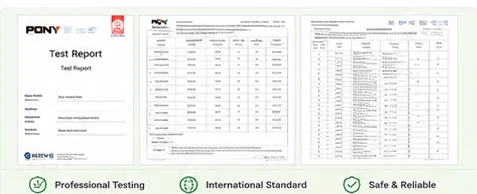
International B2B trade in herbal raw materials depends on documentation. The exact certificate or compliance file needed will depend on the destination market and buyer use case. This page is therefore framed around documentation capability and what buyers should expect — rather than making unsupported blanket claims about universal compliance.
Core Export Documents
Certificate of Analysis (COA)
The COA is the most important quality document in an Ophiopogon root transaction. A commercially useful COA should include:
| Parameter | Typical Method | Buyer Relevance |
|---|---|---|
| Botanical identity | Macroscopic / organoleptic | Confirms Ophiopogon japonicus |
| Moisture content | Oven-drying / moisture meter | Transit stability, shelf-life |
| Total ash | Pharmacopoeia method | Mineral content, purity |
| Acid-insoluble ash | Pharmacopoeia method | Silica/soil contamination |
| Foreign matter | Visual + gravimetric | Sorting quality |
| Heavy metals (Pb, Cd, Hg, As) | AAS / ICP-MS | Regulatory compliance |
| Pesticide residues | GC-MS / LC-MS-MS | Food safety compliance |
| Sulfur dioxide residue | Distillation / IC | Sulfur-free verification |
| Microbial parameters | Plate count methods | Food-grade safety |
Not all parameters are needed for every shipment. The scope should be agreed between buyer and supplier based on destination market requirements and intended product use.
For a detailed COA guide, see Ophiopogon Root COA and Documents Guide.
Certificate of Origin
- Confirms the country of origin (China) and, where applicable, the producing region
- Required for customs clearance in most destination countries
- May support preferential tariff treatment under trade agreements
- Should reference the commercial invoice and shipment details
Phytosanitary Certificate
- Issued by the plant protection authority in the exporting country
- Certifies that the plant material has been inspected and is free from regulated pests
- Required for plant-based raw material imports in most countries
- Must be obtained before shipment
Commercial Invoice and Packing List
- Standard trade documents for all international shipments
- Packing list should detail: number of bags/cartons, net weight per unit, total net and gross weight, lot numbers, shipping marks
Destination-Specific Documentation
European Union
- Pesticide residue analysis report (EU MRL compliance)
- Heavy metal testing report
- Sulfur dioxide residue test (where applicable)
- Traceability records (one-step-back, one-step-forward)
- Novel Food status documentation (if applicable)
United States
- Prior Notice (FDA) for food imports
- Supplier verification records (FSVP)
- Possible detention screening for herbal products
Middle East / GCC
- Certificate of Conformity (varies by country — Saudi Arabia SASO, UAE ESMA)
- Arabic-language labeling on outer packaging (Saudi Arabia)
- Halal supply chain documentation (if required by buyer)
Japan / Korea
- Strict pesticide residue screening
- Pharmacopoeia-grade specification alignment
- Japanese or Korean language labeling
Southeast Asia
- ASEAN harmonized cosmetic/supplement regulations where applicable
- Country-specific import permit requirements
Buyers should share destination market requirements at inquiry so documentation scope can be confirmed early.
Batch Traceability
Traceability supports both buyer confidence and regulatory compliance. A well-documented Ophiopogon root batch should connect:
- Harvest: Location (Santai County township/village), harvest period, cultivation conditions
- Processing: Drying method, processing date, sorting grade, any treatments applied
- Quality: COA results, inspection records, retention sample reference
- Packing: Bag/carton numbers, label details, pallet configuration
- Shipment: Container number, seal number, loading date, shipping marks
This traceability chain helps buyers:
- Manage warehouse inventory with clear lot identification
- Respond to downstream customer questions about product origin
- Support internal quality audits and regulatory submissions
- Plan repeat orders with documented reference to previous successful batches
Third-Party Testing
For buyers who require independent verification:
- Third-party laboratory testing can be arranged for heavy metals, pesticide residues, microbial parameters, and other specified analytes
- Testing scope and cost should be agreed before order confirmation
- Third-party reports supplement — not replace — supplier-provided COA
Common third-party testing laboratories used in Chinese herbal export include SGS, Eurofins, Bureau Veritas, and accredited Chinese laboratories (CNAS-certified).
Documentation Workflow
A typical Ophiopogon root export documentation process follows this sequence:
- Pre-order: Buyer communicates destination market and documentation requirements
- Order confirmation: Documentation scope agreed (COA parameters, testing requirements, certificates needed)
- Pre-production: Supplier confirms testing capability and certificate availability
- Production/QC: Batch testing completed; COA generated with batch-specific data
- Pre-shipment: All documents reviewed for consistency (COA matches packing list; certificate references match commercial invoice)
- Shipment: Documents transmitted to buyer (typically scanned copies first, originals by courier)
- Post-shipment: Buyer reviews documents against received cargo; any discrepancies documented immediately
Common Documentation Pitfalls
- COA that does not reference the specific batch — Every COA should carry a unique batch/lot number linked to the shipped material
- Document dates that do not align — COA date should logically precede the shipment date; phytosanitary certificate must be issued before export
- Missing destination-specific requirements — Buyers who do not communicate EU/US/GCC requirements at inquiry may face customs delays
- Inconsistent naming across documents — Product name on COA, packing list, and invoice should be consistent (e.g., “Dried Ophiopogon Root (Mai Dong)” not three different names)
- Assuming “standard” documents are sufficient — “Standard” has no fixed meaning across countries; always specify requirements per destination
How to Communicate Documentation Requirements
Documents required for this order:
- Certificate of Analysis — parameters: [moisture, ash, heavy metals Pb/Cd/Hg/As, identity]
- Pesticide residue report — standard: [EU MRL / USP <561> / other]
- Sulfur dioxide residue test — required / not required
- Phytosanitary certificate
- Certificate of Origin
- Commercial invoice and packing list
- Third-party testing: [laboratory name / not required]
- Other destination-specific: [specify]
Destination market: [country / regulatory framework] Product use: [TCM dispensing / tea / supplement ingredient / other]
Send this checklist through the contact page to align documentation scope before order confirmation.
Related Documentation Resources
- Ophiopogon Root COA and Documents Guide — detailed COA interpretation
- Quality control standards — QC framework supporting COA data
- Santai Origin overview — origin traceability context
- Pre-shipment inspection checklist — pre-dispatch verification
- Label approval checklist — labeling documentation
Commercial Documents
Invoice, packing list, shipping marks, and agreed label details are reviewed before cargo release so the paperwork and product presentation stay aligned — not assembled as an afterthought.
Testing and Supporting Files
COA support, batch inspection notes, third-party test references, and destination-specific compliance documents can be discussed according to the destination market and end-use channel.
Traceability and Consistency
Lot identification, packing references, harvest records, and shipment documentation help buyers manage warehouse intake, customs coordination, internal quality review, and repeat orders with less friction.
Related Pages
Quality Control
A detailed trust page covering intake review, sorting standards, moisture control, impurity management, batch documentation, and shipment preparation for commercial Ophiopogon root supply.
Learn MorePackaging & Shipping
A logistics-focused page for buyers comparing bag formats, protective packing, pallet methods, and export coordination.
Learn MoreContact MAI DONG ROOT Supplier | Bulk Ophiopogon Root Inquiries
A conversion-focused inquiry page for importers, wholesalers, and herbal raw material buyers.
Learn More
Knowledge Center
Ophiopogon Root COA and Documents Guide
A practical document guide for buyers who need clearer COA and file alignment before shipment approval.
Ophiopogon root COA
Ophiopogon root export documents
Read More
Export-Ready Supply
Ready to Discuss Your Inquiry?
Share your required grade, target quantity, destination market, and packing preference. We will reply with a practical commercial recommendation.