
Quality Control
Overview of MAI DONG ROOT quality control for international B2B supply: intake review, moisture check, sorting, COA support.
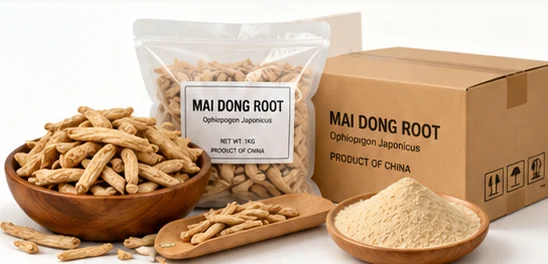
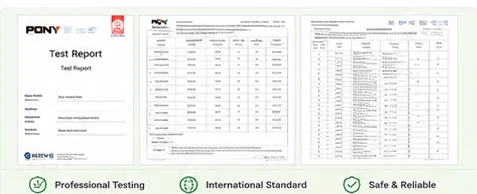
Our Quality Process
Incoming batches are checked for origin match, freshness, root form, and visible foreign matter before processing.
Roots are graded by size and appearance, then reviewed for drying condition and moisture consistency before packing.
Commercial invoice, packing list, labeling instructions, and inspection records are organized to support international buyers.
Quality control for commercial Ophiopogon root supply should not be reduced to a slogan. Buyers need to understand what is actually being checked and why it matters to storage, distribution, repeat orders, and downstream customer confidence.
This page outlines the quality control framework applied to Santai Maidong export supply — from initial intake through final dispatch preparation — in terms that commercial buyers can use to evaluate, compare, and discuss supplier QC capability.
Intake and Origin Verification
Quality control begins before processing. Incoming raw material is reviewed for:
Origin Confirmation
- Harvest location within Santai County verified against procurement records
- Harvest season documented to support batch traceability
- Visual inspection to confirm root form consistent with Santai’s recognized morphology
Freshness and Basic Condition
- Assessment of post-harvest handling (time from harvest to drying, transportation conditions)
- Initial visual screening for obvious foreign matter (soil, stones, stems, other plant material)
- Identification of any material requiring segregation before sorting and drying
This stage prevents batch confusion and ensures that material entering the processing pipeline has a documented starting point — important for buyers who need to demonstrate supply chain traceability to their own customers.
Sorting and Grading Standards
After intake verification, the material is sorted and graded according to commercial standards that buyers can reference in repeat orders:
Size Grading
- Premium / Export Grade 1: Uniform whole roots, 3-5 cm length, consistent diameter, minimal broken pieces. Suitable for TCM pharmacy dispensing and premium wholesale.
- Standard / Export Grade 2: Predominantly whole roots, mixed size range, acceptable broken root percentage below agreed threshold. Suitable for wholesale distribution and decoction manufacturing.
- Extract / Industrial Grade: Mixed-size material including smaller roots and acceptable broken pieces. Suitable for extraction and ingredient manufacturing.
Sorting Process
- Manual sorting for visual quality: trained workers remove discolored, damaged, or substandard roots
- Density separation where applicable for foreign matter removal
- Final visual inspection before drying confirmation
Appearance Standards
For premium grades, the sorted material should demonstrate:
- Consistent yellow-white to pale brown surface color (after proper drying)
- Minimal black spots, insect damage, or surface blemishes
- Uniform root shape consistent with Santai morphology
- Clean surface free of attached soil or foreign particles
Moisture Control
Moisture content is the single most impactful quality parameter for dried herbal raw material in international trade. It affects:
- Transit stability: Excessive moisture promotes mold during container sea freight (2-6 weeks depending on route)
- Storage behavior: High-moisture material degrades faster in warehouse conditions, especially in warm climates
- Weight integrity: Moisture loss during transit creates weight discrepancies between loading port and destination
- Downstream processing: Extraction yield calculations and blending formulations depend on known moisture content
Target Specification
- Export standard: 10-12% moisture content
- EU / quality-sensitive markets: Often require ≤10% with documented testing
- Tropical-climate destinations: Lower moisture targets may be recommended with moisture-barrier packaging
Control Methods
- Moisture measurement per batch using calibrated moisture meters or oven-drying method
- Visual and tactile assessment by experienced QC personnel as supplementary check
- Documentation of moisture readings in batch records and COA
Impurity and Foreign Matter Control
Impurity Types Managed
- Organic foreign matter: Stems, leaves, root fragments from other species, weed material
- Mineral foreign matter: Soil particles, small stones, sand
- Processing residues: Fiber fragments from bag handling, dust
Tolerance Levels
- Premium export grade: Typically ≤1% total foreign matter by weight
- Standard export grade: Typically ≤2%
- Specific tolerance should be agreed between buyer and supplier before order confirmation
Control Methods
- Visual inspection during sorting
- Sieve separation for fine particles
- Magnetic separation where applicable for ferrous metal fragments
- Final lot inspection before packing
Drying Method and Sulfur Status
Drying Approaches
- Natural sun-drying: Traditional Santai method. Produces roots with the most recognized appearance for TCM channels. Weather-dependent; processing capacity varies seasonally.
- Controlled drying: Machine-assisted drying in temperature and humidity-controlled environments. More consistent across weather conditions; may produce slightly different surface appearance.
- Combined approach: Initial sun-drying followed by controlled finishing for moisture target achievement.
Buyers should confirm the drying method used for their batch, as it affects appearance and — for TCM channels — downstream buyer perception.
Sulfur Treatment Status
- Sulfur-free: No sulfur fumigation at any processing stage. Required for EU and quality-sensitive markets. Confirmed by sulfur dioxide residue testing.
- Low-sulfur: Historically common in domestic Chinese markets for color preservation and pest deterrence. Residual levels must comply with destination-country limits.
- Standard (traditional): Sulfur fumigation applied. Not recommended for international export buyers targeting regulated markets.
Buyers must specify sulfur treatment requirements at inquiry. A COA should include sulfur dioxide residue data when sulfur-free status is requested.
Batch Documentation and COA
A commercially useful Certificate of Analysis for Ophiopogon root export should include:
Core Parameters
| Parameter | Typical Method | Relevance |
|---|---|---|
| Moisture content | Oven-drying / moisture meter | Transit stability, weight integrity |
| Total ash | Pharmacopoeia method | Mineral content, purity indicator |
| Acid-insoluble ash | Pharmacopoeia method | Silica/soil contamination indicator |
| Macroscopic identification | Visual inspection | Species and form confirmation |
| Foreign matter | Visual + gravimetric | Purity, sorting quality |
Extended Parameters (On Request)
| Parameter | When Required |
|---|---|
| Heavy metals (Pb, Cd, Hg, As) | EU markets, pharmacopoeia-grade supply |
| Pesticide residue screen | EU food supplement/herbal tea channels |
| Sulfur dioxide residue | Sulfur-free verification, EU compliance |
| Microbial load (TPC, yeast/mold, E. coli, Salmonella) | Food-grade and tea-grade supply |
| Aflatoxins | Some destination-country requirements |
Batch Traceability
Each COA should reference:
- Batch/lot number linking to harvest records
- Processing date
- Origin location (Santai County, Sichuan)
- Net weight of the batch
For documentation structure, see the certificates page and COA and documents guide.
Pre-Shipment Quality Review
Before cargo release, a final quality review typically includes:
- Batch-lot verification: Confirm the loaded batch matches the approved sample or specification
- Packing integrity check: Bag seals, inner liner placement, label accuracy, pallet stability
- Document alignment: COA, packing list, and invoice data cross-checked against the physical shipment
- Batch photo documentation: Representative photos of the loaded material for buyer reference (see batch photo confirmation guide)
See also pre-shipment inspection checklist and packing confirmation checklist.
How Buyers Can Evaluate Supplier QC
When comparing Ophiopogon root suppliers, ask these quality-specific questions:
- “Can you share a sample COA format showing the parameters you test?”
- “What is your moisture target for export-grade material, and how is it measured?”
- “Can you describe your sorting process — manual, machine-assisted, or both?”
- “What is your foreign matter tolerance, and how is it verified?”
- “Do you support sulfur-free processing with documented residue testing?”
- “Can you provide batch-level traceability from harvest origin through shipment?”
- “Are pre-shipment photos and inspection records available before cargo release?”
A supplier who can answer these questions with specific numbers and documented processes is demonstrating commercial QC capability. A supplier who answers with vague claims (“we ensure good quality”) is not.
For a full supplier evaluation framework, see Bulk Ophiopogon Root Supplier Checklist and Ophiopogon Root Buyer Guide.
Related Quality Resources
- How to Evaluate Dried Ophiopogon Root Quality — buyer-side evaluation methodology
- Ophiopogon Root Quality for Distributors — distributor-specific quality perspective
- Santai Origin overview — why origin matters for quality consistency
- Certificates page — documentation framework
- Export packing mistakes checklist — packing quality risks
Certifications & Documents
Frequently Asked Questions
Can you support Santai-origin batch supply for repeat orders?
Yes. Orders are arranged around Santai-origin procurement channels with batch-level coordination for repeat commercial buying.
What packaging formats are common for export orders?
Common formats include 20 kg to 30 kg woven or kraft bags, inner liners, cartons, and pallet loading depending on destination and buyer handling needs.
Do you support samples and specification confirmation before full order placement?
Yes. Buyers can request a sample, discuss grade expectations, and confirm target specifications before booking the production batch.