
Grade Dependent
Price varies by whole root size, drying method, sulfur-free status, and cleanliness grade
Understand MAI DONG ROOT pricing factors: grade, quantity, moisture spec, packaging, and destination port.
Price varies by whole root size, drying method, sulfur-free status, and cleanliness grade
Trial orders, regular wholesale quantities, and annual contract volumes follow different pricing tiers
Packing format, destination documents, and shipping terms affect the final landed cost
MAI DONG ROOT, also written as Mai Dong, Ophiopogon root, or Radix Ophiopogonis, is a Chinese herbal raw material commonly sourced by importers, wholesalers, TCM distributors, tea brands, and ingredient processors. Pricing is shaped by Santai origin, drying method, whole-root appearance, sulfur-free processing, moisture level, sorting cleanliness, packing format, and destination-market documentation. Buyers comparing bulk quotations should evaluate product form, MOQ, QC scope, and shipping terms together rather than treating the ex-factory quote as the full cost.
This guide is most useful for:
If you are still at the early comparison stage, pair this page with MAI DONG ROOT FAQ so the commercial questions and operational questions stay aligned.
Every MAI DONG ROOT quotation is built around a commercial scenario, not a single list price. A buyer looking for a tea-grade replenishment order will usually need a different quote from a distributor placing a repeat TCM program or an ingredient processor ordering raw material for extraction.
The most useful quotation starts with five inputs:
If those five fields are clear, pricing can be aligned to a real buying route instead of a generic sales reply.
The more consistent the root size, sorting, and visible cleanliness, the more likely a batch is to command a higher price band. Buyers usually pay more for material that looks uniform, ships cleanly, and needs less repacking or re-sorting at destination.
Sun-dried and carefully finished batches are usually discussed differently from batches that were rushed through drying or need extra screening. Moisture affects storage stability, shipping confidence, and the risk of quality complaints after arrival.
If a buyer needs sulfur-free processing, residue review, or stricter QC language, the supplier may need to allocate more sorting time, testing support, and batch handling. That affects quotation structure.
Small trial orders help buyers confirm product fit, but the per-kilogram price is often higher because fixed labor and documentation costs are spread over a smaller volume. Repeat wholesale shipments usually benefit from more efficient pricing.
Packing is not a cosmetic detail. A woven bag shipment, a carton-packed private-label order, and a palletized export order each involve different labor, materials, and handling steps. If you need inner liners, printed cartons, or a specific bag weight, the quotation should reflect that.
Different markets create different compliance and logistics costs. A shipment headed to Europe may need a stronger document package than a domestic wholesale order. Middle East and Latin America destinations may emphasize packing durability, shipment marks, and pallet planning.
| Buying scenario | What usually drives the price | What to clarify first |
|---|---|---|
| Trial order | Small volume, sample handling, document setup | Target grade, sample purpose, destination |
| Repeat wholesale | Stable volume, lower handling cost per unit | Monthly forecast, packing style, reorder frequency |
| Distributor program | Consistency, presentation, batch continuity | Brand need, warehouse workflow, label requirements |
| Ingredient program | QC, documentation, moisture stability | Intended use, testing scope, batch size |
| Export project | Packing, documents, shipment terms | Port, certificate scope, delivery timeline |
Use the questions below when comparing suppliers. They help you avoid quotes that look cheap at first but become expensive later.
Herbal raw material pricing changes with harvest timing, stock condition, sorting cost, and market demand. A fixed number without grade, quantity, and destination context would be more misleading than helpful.
A correct quotation should reflect:
That is why a buyer who shares a proper brief receives a much more useful answer than a buyer who asks only for a “best price.”
If you compare suppliers, make sure the quotes are normalized. A cheaper number may actually exclude packing, testing, or documentation. A slightly higher number may be better if it includes cleaner presentation, stronger QC support, and export-ready paperwork.
When evaluating MAI DONG ROOT pricing, compare these items side by side:
Copy and send this brief when requesting a quotation:
Product form:
Target grade:
Quantity range:
Moisture target:
Sulfur-free requirement:
Packing preference:
Destination country/port:
Required documents:
Expected shipment time:
Sample or batch photo request:
If you send all ten fields, you will usually get a far better quotation than a one-line inquiry.
A quotation becomes much more accurate when it is connected to the rest of the buyer journey. Pricing should be evaluated together with the document set, packing format, shipment release step, and receiving expectations.
Use these pages together:
These pages help buyers align pricing with the full order path:
Because the underlying spec is usually not actually the same. Differences in grade, moisture, packing, testing, and destination all change the final quotation.
No. In herbal sourcing, the cheapest quote can hide weaker sorting, poorer packing, or missing documents.
Send the product form, quantity, target grade, packing style, and destination market. Those five inputs solve most quotation ambiguity.
Yes. Trial orders are often the smartest way to confirm quality and presentation before scaling to repeat shipments.
Yes. Compliance, packing, and shipping requirements differ by market, so the same product can produce different landed costs.
MAI DONG ROOT pricing is shaped primarily by harvest season quality, root size grading, drying method (natural vs. machine-assisted), sulfur-free processing, impurity control level, and moisture specification. Buyers who share target grade, quantity range, and destination market early receive more actionable quotations.
Trial orders (typically 20-100 kg) help buyers confirm appearance and drying condition. Regular wholesale quantities (200-1,000 kg per shipment) benefit from volume-adjusted pricing. Annual contract discussions allow further supply planning and price stability across multiple shipments.
Standard woven or kraft bags (20-30 kg) represent the baseline packing cost. Inner PE liners, vacuum sealing, carton boxing, private-label printing, and pallet configuration add incremental per-unit cost but improve presentation and warehouse handling for specific markets.
COA preparation, pesticide residue testing, heavy metal screening, and destination-specific phytosanitary or fumigation certificates may add per-batch costs. We coordinate documentation scope early so buyers can budget accurately before shipment booking.
Key factors include root size grade, drying method (natural vs. machine-assisted), sulfur-free status, moisture specification, impurity control level, quantity ordered, packing format, destination documentation requirements, and current harvest season conditions.
Yes. Trial orders (20-100 kg) help buyers confirm appearance and drying condition before committing to larger volumes. Regular wholesale quantities (200-1,000+ kg) benefit from volume-adjusted pricing. Annual contract arrangements allow further price stability.
Send your target grade, quantity range, destination market, and packing preference through our contact page. You will typically receive a specification-matched recommendation and price guidance within 24 hours.
MOQ varies by product form: typically 20-50 kg for dried whole root, 25 kg for sulfur-free grades, and 10 kg for extract powder. Contact us with your specific requirement for current MOQ details.
Yes. For buyers planning repeat shipments or annual procurement programs, we can discuss volume-adjusted pricing, supply planning, and price stability mechanisms. Share your annual volume estimate when you inquire.
Yes. Standard woven or kraft bags represent the baseline. Inner PE liners, vacuum sealing, carton boxing, private-label printing, and pallet configuration add incremental cost but improve presentation and handling.
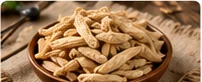
Origin-led whole root supply for premium import and TCM distribution programs.
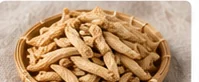
Commercial wholesale grade built for distributor replenishment and repeat export buying.
Traditional channel-fit supply for TCM sourcing teams prioritizing root form and origin identity.
A detailed trust page covering intake review, sorting standards, moisture control, impurity management, batch documentation, and shipment preparation for commercial Ophiopogon root supply.
Learn MoreA documentation-focused trust page covering COA parameters, phytosanitary certificates, Certificate of Origin, batch traceability, testing support, and how buyers should communicate documentation requirements before ordering.
Learn MoreA logistics-focused page for buyers comparing bag formats, protective packing, pallet methods, and export coordination.
Learn MoreA conversion-focused inquiry page for importers, wholesalers, and herbal raw material buyers.
Learn MoreExport-Ready Supply
Share your required grade, target quantity, destination market, and packing preference. We will reply with a practical commercial recommendation.