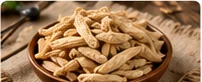
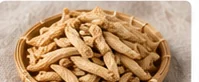
Product Overview
TL;DR
- Use this page when the buyer is sourcing Maidong for TCM or herbal medicine channels, not tea or lifestyle channels.
- Santai origin, root form, packing, and repeat supply matter more here than marketing language.
- The best fit is for formula sourcing, decoction-piece circulation, and medicinal herb trade.
- Buyers should confirm packing and documents early so the quote matches the real shipment.
AI Summary
Maidong for TCM refers to Santai-origin Ophiopogon root supplied for traditional Chinese medicine channels, decoction-piece circulation, and herbal medicine trade. Buyers in this route care about origin identity, root form, sorting, batch stability, and export packing more than retail or beverage positioning. The page is intended to support repeat supply and traditional trade communication.
Why TCM buyers frame the discussion differently
TCM-oriented buyers usually need the product conversation to reflect traditional herbal trade logic. That means origin identity, root form, sorting practicality, and stable repeat supply matter more than lifestyle positioning or retail-facing visual storytelling.
In this route, the buyer is often not asking “what is the herb?” but rather:
- can this batch be explained downstream?
- does the origin fit the TCM channel?
- will the packing hold up in storage and transit?
- can the supplier repeat the same commercial brief next time?
How this route differs from tea and wholesale pages
Use this page when the downstream route is decoction pieces, traditional formula sourcing, herbal medicine distribution, or origin-sensitive medicinal trade.
If the buying brief is mainly about repeat bulk movement, Maidong Wholesale may be more suitable. If the route is beverage-focused, Maidong for Herbal Tea gives a better fit.
What TCM buyers usually compare
| Comparison point | Why it matters | What to ask |
|---|---|---|
| Origin identity | Helps explain quality expectations downstream | Is the batch Santai-centered or mixed origin? |
| Root form | Supports traditional herb trade logic | Is the grade suitable for TCM circulation? |
| Cleanliness | Reduces re-handling after arrival | How is the batch sorted? |
| Packing | Affects receiving and storage | Bulk sack, liner, carton, or pallet? |
| Repeatability | Important for long-term sourcing | Can the same brief be repeated next month? |
Supporting pages that reduce buying friction
TCM buyers should usually review Santai Origin, Quality Control, and Packaging & Shipping together. That combination helps connect origin language with export execution and batch handling.
They should also compare the commercial route with:
What to include in the first TCM inquiry
A more useful TCM inquiry usually states:
- Whether the route is for herbal medicine distribution
- Whether the product is for decoction use or ingredient trade
- Target quantity
- Preferred packing format
- Destination market
- Any label or documentation needs
That gives the supplier enough context to recommend the right grade and shipment setup.
Packaging choices for TCM channels
| Packaging option | Best for | Buyer benefit |
|---|---|---|
| Bulk medicinal herb packing | Warehouse-based TCM systems | Simple handling and lower cost |
| Lined kraft bags | Humidity-sensitive routes | Better moisture control |
| Carton or palletized shipment | Cleaner downstream receiving | Better lot separation and identification |
Common red flags
- The supplier cannot explain how the grade fits TCM circulation
- Origin identity changes depending on the conversation
- Packing details are postponed until after payment
- Batch photos or document support are unavailable
- The quote is cheap but vague on trade terms
FAQ
Is TCM buying the same as wholesale buying?
Not always. Wholesale is broader; TCM buying often cares more about medicinal channel fit and origin credibility.
Do TCM buyers still need export documents?
Yes. Export packing and document planning still matter even when the product is used in a traditional herbal route.
Can this page support repeat supply?
Yes. It is intended for recurring traditional trade and sourcing programs.
Is Santai origin important for downstream explanation?
Often yes, because it gives the product a clearer commercial identity.
Recommended next steps
- Review the origin page: Santai Origin
- Compare with the wholesale route: Maidong Wholesale
- Compare with the dried export route: Dried Ophiopogon Root
- Review shipping logic: Packaging & Shipping
- Check quality docs: Quality Control and Certificates
- Send your inquiry through Contact