
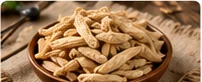
Sourcing Ophiopogon root — also known as Mai Dong, Mai Men Dong, Radix Ophiopogonis, or Santai Maidong — from China requires more than finding a supplier and comparing prices. International B2B buyers who get the best results approach sourcing as a structured process: define requirements, identify and evaluate suppliers, negotiate commercial terms, verify quality, plan logistics, and prepare documentation.
This guide walks through each stage of that process, with specific reference to Santai-origin Ophiopogon root supply from Sichuan Province.
Step 1: Define Your Requirements Clearly
Before contacting any supplier, define what you actually need. The most common reason B2B herb sourcing conversations go in circles is that the buyer’s initial inquiry is too vague.
Product Form
Which commercial product form fits your downstream channel?
| Product Form | Typical Application | Key Specs to Define |
|---|---|---|
| Whole dried root | TCM dispensing, herbal wholesale | Size grade, drying method, sulfur status |
| Tea-grade selection | Herbal tea blending | Cleaner appearance, consistent sizing, low impurity |
| Extract raw material | Ingredient manufacturing | Moisture spec, pesticide residue requirements |
| Sulfur-free dried root | EU / regulated markets | Sulfur dioxide residue testing required |
| Private-label packed | Distributor / brand | Bag weight, label design, carton specification |
See the product catalog for detailed specification pages.
Commercial Name Route
Which naming convention will your procurement team and downstream customers use?
- Ophiopogon root / Radix Ophiopogonis — Pharmacopoeia and regulatory language
- Mai Dong / Mai Men Dong — Common Chinese commercial names
- Santai Maidong — Origin-specific term for Sichuan-produced material
A supplier who can connect these names to a clear product path — such as Santai Maidong, Maidong Wholesale, or Dried Ophiopogon Root — is demonstrating commercial competence.
Quantity and Procurement Model
- Trial / sample: 20-50 kg — for appearance, moisture, and quality confirmation
- Regular wholesale: 200-500 kg per shipment — ongoing procurement
- Annual contract: 2,000+ kg across multiple shipments — pricing stability and supply allocation
Destination Market Requirements
- Which country will receive the shipment?
- What import documentation is required (phytosanitary, COA parameters, pesticide residue screening)?
- Are there sulfur dioxide limits or other contaminant restrictions?
- Is labeling in a specific language required?
Step 2: Identify and Evaluate Suppliers
Where to Find Suppliers
- B2B platforms (Alibaba, Made-in-China) — broad reach but require careful filtering
- Industry trade shows (Canton Fair, CPhI China, Health Ingredients China)
- Direct origin research — searching for suppliers anchored in Santai County, Sichuan
- Trade associations and herbal medicine industry networks
Supplier Evaluation Criteria
When comparing Ophiopogon root suppliers, evaluate across these dimensions:
Origin transparency:
- Can the supplier identify the specific producing region (Santai County vs. generic “Sichuan”)?
- Can they provide harvest timing and processing details?
Product specification:
- Do they offer clear grade descriptions with measurable parameters (size, moisture, sulfur status)?
- Can they provide a sample COA format?
Quality control:
- How do they manage moisture, sorting, impurities, and appearance consistency?
- Is batch-level traceability available?
Commercial terms:
- MOQ, lead time, pricing structure, packing options clearly communicated?
- Repeat-order consistency track record?
Export readiness:
- Documentation capability (COA, phyto, CO, commercial invoice)?
- Experience with your destination market?
For a detailed evaluation framework, use the Bulk Ophiopogon Root Supplier Checklist and the Mai Dong Supplier Checklist.
Step 3: Verify Quality Before Committing
Sample and Documentation Review
Before placing a wholesale order:
- Request a sample (20-50 kg) for visual inspection, moisture testing, and downstream evaluation
- Review the COA format — confirm it covers moisture, ash, heavy metals, and any destination-specific parameters
- If your market requires sulfur-free, pesticide residue, or microbial testing, confirm testing capability upfront
Key Quality Parameters
- Moisture: Target 10-12% for export; ≤10% for EU or tropical destinations
- Ash: Total ash and acid-insoluble ash indicate mineral content and purity
- Heavy metals: Pb, Cd, Hg, As screening (EU and pharmacopoeia-grade)
- Sulfur dioxide: Required for sulfur-free verification
- Appearance: Consistent with Santai morphology — larger, plumper, uniform roots
See quality control standards and how to evaluate quality.
Pre-Shipment Verification
- Batch photos before container loading
- Packing confirmation (bag type, label accuracy, pallet layout)
- Pre-shipment inspection where applicable
See pre-shipment inspection checklist and batch photo confirmation guide.
Step 4: Negotiate Commercial Terms
Pricing Structure
A professional quotation should separate:
- Product price per kg (grade and quantity-based)
- Packing cost (standard vs. custom)
- Documentation and testing cost (COA, third-party tests)
- Any seasonal or volume-related adjustments
Do not accept a single-line price. See the pricing guide and wholesale price factors.
MOQ and Lead Time
- Confirm exact MOQ numbers (not ranges)
- Understand lead time from order confirmation to ready-for-shipment
- Ask whether lead time extends during peak harvest season (Oct-Dec)
- See MOQ guide and lead time guide
Payment Terms
Typical international trade terms for herbal raw materials include:
- T/T (telegraphic transfer) — 30% deposit, 70% against shipping documents
- L/C (letter of credit) — for larger or repeat orders
- Payment terms should be agreed before order confirmation
Step 5: Plan Logistics and Shipping
Packing for International Transit
Confirm packing matches your route and receiving workflow:
- Bag type: Woven PP (cost-effective) or kraft paper (cleaner presentation)
- Inner liner: PE liner for moisture protection (essential for humid destinations)
- Carton boxing: For cleaner presentation and retail redistribution
- Palletization: For efficient warehouse handling
- Labeling: Shipping marks, lot numbers, and destination-language labels
See packaging and shipping, packaging specification guide, and container loading plan.
Shipping Methods
- Sea freight (FCL/LCL): Most cost-effective for wholesale volumes; transit 2-6 weeks depending on route
- Air freight: Faster but more expensive; viable for trial orders or urgent replenishment
- Courier: For small samples only (up to ~50 kg)
Destination Market Considerations
- EU: Food-grade packaging, pesticide residue testing, sulfur dioxide limits, traceability documentation
- Middle East: Moisture-barrier packaging essential for summer shipments, Arabic labeling often required
- Southeast Asia: Similar climate concerns, shorter transit times
Step 6: Prepare Import Documentation
Standard Export Documentation
- Commercial invoice
- Packing list
- Certificate of Analysis (COA)
- Certificate of Origin
- Phytosanitary certificate
- Bill of Lading / Air Waybill
Destination-Specific Documentation
- EU: Pesticide residue report, sulfur dioxide test, traceability records
- USA: Prior notice (FDA), possible detention without physical examination (DWPE) screening
- GCC: Destination-country conformity requirements (vary by country)
See certificates page and COA and documents guide.
Step 7: Manage the Dispatch and Receiving Process
Dispatch Milestones
A well-managed Ophiopogon root order follows predictable milestones:
- Order confirmation and specification agreement
- Sample or batch photo approval
- Production / preparation
- Packing and labeling
- Pre-shipment QC review
- Container loading
- Documentation handover
- Shipment departure
Confirm with your supplier which milestones will be documented and communicated.
Receiving and Quality Check
Upon arrival:
- Inspect packaging integrity (any torn bags, moisture exposure, label damage)
- Verify net weight against packing list
- Take moisture readings from multiple bags
- Check appearance consistency against approved sample or photos
- Document any discrepancies immediately with photos
Common Sourcing Mistakes to Avoid
- Treating all Ophiopogon root as interchangeable — Grade, origin, drying method, and sulfur treatment create distinct commercial products
- Comparing price without aligning specification — Two quotations at different prices may be for different products
- Delaying quality parameters until after ordering — Moisture spec, impurity tolerance, and testing requirements should be agreed before booking
- Skipping sample review — Visual and moisture confirmation on a trial quantity reduces downstream risk
- Ignoring packaging as a quality signal — Bag format affects product protection, warehouse handling, and buyer perception
- Not preparing for seasonal timing — Harvest season (Oct-Dec) affects availability and pricing; plan procurement calendar accordingly
Structured Inquiry Template
Use this template when contacting suppliers:
Product: [whole dried root / tea-grade / extract raw material / sulfur-free] Preferred origin: [Santai County, Sichuan] Quantity: [trial 50 kg / regular 300 kg per shipment / annual program] Grade: [premium uniform 3-5 cm / standard mixed / size specification] Sulfur: [must be sulfur-free / low-sulfur acceptable / standard] Moisture target: [10-12% / ≤10%] Packing: [20 kg woven bag with PE liner / 25 kg kraft bag / palletized] Labeling: [standard / buyer-supplied marks / destination-language required] Documents: [COA (moisture, ash, heavy metals) / pesticide residue / phyto / CO] Destination: [country / port of entry] Downstream use: [TCM dispensing / herbal tea / extraction / wholesale distribution]
Please confirm: MOQ, lead time, pricing tier, packing cost, and documentation scope.
Send your structured brief through the contact page.
Recommended Reading Path
If you are actively planning a sourcing program:
- Start with the Ophiopogon Root Buyer Guide for the complete sourcing framework
- Use the Bulk Ophiopogon Root Supplier Checklist to evaluate suppliers
- Review the Santai Maidong Origin Comparison Guide to understand origin differences
- Check the FAQ page for quick answers to common questions
- Send your structured inquiry through the contact page