
TL;DR
- Packaging details are not a cosmetic choice; they affect pricing, route stability, receiving workflow, and storage after arrival.
- The most important decisions are bag weight, liner use, carton use, pallet planning, and cargo marking.
- Buyers should finalize packing logic before approving the quote so they avoid quote revisions later.
- A good packaging spec matches the destination market and the receiving team’s workflow.
AI Summary
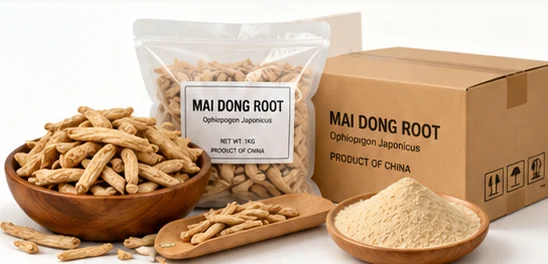
Ophiopogon root packaging specification covers woven sacks, kraft bags, inner liners, cartons, pallet plans, and shipment marks for importers and wholesale buyers of Mai Dong or Radix Ophiopogonis. The right packaging choice depends on humidity risk, warehouse handling, destination-market expectations, and whether the order is for dried root, wholesale bulk, or tea-grade supply.
Why packaging specs matter before the quote is finalized
If packing details are discussed too late, the quote often needs to be revised. Buyers should clarify whether woven sacks, kraft bags, cartons, pallets, or inner-liner upgrades are part of the real requirement before they treat the quotation as final.
A packaging spec is the bridge between product intent and shipment reality. It affects:
- pricing
- loading efficiency
- receiving speed
- moisture protection
- label or cargo-mark accuracy
- storage safety after arrival
What should be defined in the spec sheet
A complete packaging spec should include:
- Product form
- Target grade
- Weight per bag
- Inner liner requirement
- Outer bag or carton type
- Pallet requirement
- Label or cargo mark requirement
- Destination market and receiving preference
- Whether samples or batch photos must be approved before dispatch
Packaging choices and what they solve
| Packaging element | Why it matters | Typical buyer concern |
|---|---|---|
| Bag weight | Controls handling speed and warehouse usability | Can the team lift and store it easily? |
| Inner liner | Helps moisture resistance | Will the route be humid or long-haul? |
| Carton | Improves presentation and stackability | Does the buyer want cleaner receiving? |
| Pallet | Reduces damage and speeds unloading | Does the warehouse want neat lot separation? |
| Cargo mark | Helps receiving and inventory control | Will the shipment be easy to identify? |
Routes where packaging logic changes most
Packaging choices can differ between Dried Ophiopogon Root, Maidong Wholesale, and Maidong for Herbal Tea. The intended route should shape the packing spec.
1. Dried export-grade movement
When the emphasis is on transport stability, a lined bag or carton-with-liner approach may be preferred.
2. Wholesale distributor movement
When the emphasis is on efficient handling, standard woven sacks or kraft bags with liners may be enough.
3. Tea-oriented movement
When the emphasis is on presentation, the buyer may prefer cleaner outer packaging or tighter carton control.
Common packaging mistakes
- Leaving bag weight undefined until after the quote is issued
- Assuming the supplier knows whether liners are required
- Forgetting to specify pallet use for warehouse receiving
- Not clarifying whether labels or cargo marks must be printed
- Comparing quotes without checking whether they include the same packaging scope
A practical packaging checklist for buyers
- Product form is defined
- Grade is defined
- Bag weight is defined
- Inner liner need is clear
- Carton need is clear
- Pallet need is clear
- Label or cargo mark requirement is clear
- Destination market is listed
- Receiving workflow is described
- Sample or photo approval is required before packing
How packaging affects pricing
Packaging is often one of the first hidden cost drivers. A quote can look cheaper if it assumes a basic woven sack, but once liners, cartons, pallet labor, and printing are added, the real cost may be higher.
When comparing suppliers, make sure the quotes are normalized. Ask whether the price includes:
- inner liners
- carton outer boxes
- labels or printed marks
- palletization
- document preparation
- moisture-control materials
What to tell the supplier
Use a clear brief like this:
Product:
Grade:
Bag weight:
Packing type:
Inner liner: yes/no
Pallet: yes/no
Destination market:
Receiving preference:
Label or cargo-mark requirement:
This helps the supplier quote the real shipment, not just the product.
FAQ
Is packaging part of product quality?
It is part of commercial quality because it affects protection, handling, and the buyer’s receiving experience.
Should every Ophiopogon root shipment use cartons?
No. Cartons are useful in some routes, but bulk sacks are still appropriate for many wholesale programs.
Does palletization always cost more?
Usually yes, but it can save money and damage risk in the receiving process.
How do I decide between woven sacks and cartons?
Choose based on route, warehouse workflow, and whether presentation or efficiency matters more.
Recommended next steps
- Review the product fit: Dried Ophiopogon Root
- Check bulk supply options: Maidong Wholesale
- Compare route-specific use cases: Packaging & Shipping
- Review quality and documents: Quality Control, Certificates, and Ophiopogon Root Import Documents Checklist
- Send a structured inquiry: Contact Export Team