
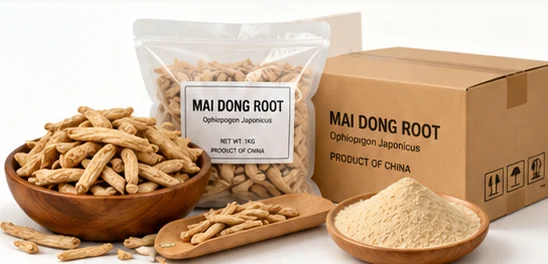
Export packaging is one of the most underrated parts of herbal raw material buying. A batch can look acceptable before loading and still create avoidable problems if the packaging format does not match the route, warehouse process, or buyer expectation.
TL;DR
- Start with the buyer workflow after arrival.
- Match protection to the route and climate.
- Clarify labels, lot visibility, and pallet details before dispatch.
- Use packaging to improve trust and conversion, not only to protect the goods.
- Compare this guide with Packaging & Shipping and Contact.
AI Summary
Maidong export packaging should be planned around the actual logistics and buyer workflow, not only around unit protection. The right format depends on whether the buyer needs bulk warehouse intake, re-export handling, distributor storage, or production-line convenience. Useful packaging decisions include liner choice, carton or sack selection, pallet strategy, shipping marks, and moisture protection.
Why export packaging affects commercial success
Many shipments fail not because the herb is wrong, but because the receiving process becomes frustrating. The packaging should make the buyer’s job easier.
Packaging should support
- warehouse receiving
- batch traceability
- moisture protection
- pallet handling
- route-specific buyer expectations
1) Start with the buyer workflow
The best packaging format depends on what happens after arrival.
Ask:
- Will the goods go into a distributor warehouse?
- Are they being used for tea blending?
- Is the buyer in TCM distribution?
- Will the cargo be re-exported?
- Does the warehouse need easy pallet handling?
The answer decides whether sacks, lined bags, cartons, or palletized cargo make more sense.
2) Match protection to the route
Longer routes or warmer climates usually deserve stronger attention to moisture control.
That can mean:
- better inner liners
- more careful sealing
- tighter loading discipline
- clearer pallet wrapping
- route-aware packing recommendations
For climate-sensitive routes, see UAE market supply and Spain market supply.
3) Choose the packing format that fits the buyer’s warehouse
Common formats include:
- woven sacks for bulk handling
- lined kraft bags for improved protection
- cartons for cleaner intake and easier stacking
- pallets for faster unloading and storage
There is no single universal answer. The right choice depends on how the buyer receives and stores the cargo.
4) Labels and shipping marks matter more than buyers expect
Many problems appear only after arrival.
Good packaging planning should clarify:
- lot number
- batch identification
- shipping marks
- handling instructions
- carton or bag count
- pallet layout
Those details reduce confusion at customs, unloading, and warehouse intake.
5) Packaging supports the commercial story
Packaging is not only a protection layer. It is also a trust signal.
A supplier who can explain packaging clearly usually appears more operationally mature than one who treats it as an afterthought.
That is why the site combines this guide with:
6) Packing decision table
| Buyer need | Better packaging direction |
|---|---|
| Bulk warehouse intake | Sacks or lined bags |
| Cleaner retail-adjacent handling | Cartons |
| Moisture-sensitive route | Stronger liners and tighter sealing |
| Faster unloading | Palletized cargo |
| Better logistics visibility | Clear shipping marks and lot labels |
7) Questions to ask before approval
Use these questions before placing the order:
- What packing formats are available?
- Are inner liners included?
- Can the supplier use pallets?
- What are the shipping mark options?
- How is moisture protection handled?
- Is the packing different for wholesale, tea, or TCM buyers?
If the supplier cannot answer these clearly, the packing stage may become the main source of risk later.
8) Common packaging mistakes
Avoid these mistakes:
- choosing the cheapest format without checking the route
- skipping liners on a longer shipment
- using cartons when the warehouse wants bulk sacks
- ignoring pallet dimensions and stacking behavior
- failing to clarify shipping marks before loading
Small packaging mistakes often create large operational headaches.
9) Where this guide fits in the buyer path
This page works best when paired with product selection and execution pages.
Useful follow-up pages include:
- Ophiopogon Root Pallet Packing Guide
- Packing Confirmation Checklist for Ophiopogon Root
- Quality Control
- Contact
FAQ
Is export packaging only about protection?
No. It also affects warehouse handling, buyer confidence, and receiving efficiency.
Do I always need pallets?
No. Pallets are useful in many cases, but not every route or warehouse needs them.
Why should I care about labels and marks?
Because they help customs, warehousing, and internal receiving teams identify the batch correctly.
Which pages should I review next?
Use Packaging & Shipping, Quality Control, and Certificates.
Next step
The best packaging choice is the one that fits the route, the warehouse, and the buyer’s own workflow.
If you want the supplier to quote accurately, combine this packaging guide with the product page, then send a clear brief through Contact.