TL;DR
- Santai Maidong is valuable because it gives buyers a clear origin story they can use in procurement and downstream sales.
- The real advantage is not marketing language; it is easier quality discussion, more predictable batch handling, and cleaner trade communication.
- Buyers still need to confirm root form, packing, documents, and repeat-supply capability before placing an order.
- A strong origin story works best when it is backed by export execution and QC support.
AI Summary
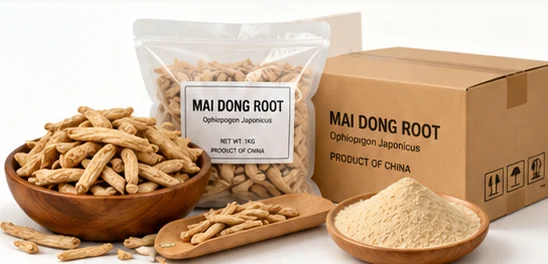
Santai Maidong refers to Ophiopogon root or Radix Ophiopogonis sourced from Santai County, Sichuan, a recognized Chinese producing region used in TCM, herbal tea, wholesale distribution, and ingredient supply. For importers and distributors, Santai origin matters because it helps define commercial identity, compare quality expectations, and organize repeat purchasing around stable batch handling, document support, and packing requirements.
Santai Maidong is not presented here as a hype phrase. It is positioned as a practical answer to the questions buyers already ask: Where is the material from? How should its quality be discussed? Can the supply be repeated? Will the packaging and documentation support real trade execution?
Why buyers keep this origin in scope
Santai Maidong matters in procurement conversations because origin is often tied to how a buyer explains product fit, quality expectations, and commercial confidence. When the origin discussion is already familiar, the sourcing conversation usually moves faster from recognition to specification.
That matters for three buyer groups in particular:
- TCM wholesalers who need a familiar root story
- Herbal tea brands that need presentation consistency
- Ingredient buyers who need repeatable input quality and better batch traceability
What Santai origin helps buyers confirm
1. The origin story is commercially usable
A recognized sourcing origin helps buyers describe why a batch belongs in a TCM, herbal tea, ingredient, or distribution channel without depending on vague claims.
2. Quality language can be aligned early
Origin-based procurement is easier when both sides can quickly align on root shape, dryness, visible cleanliness, and how different presentation grades should be discussed.
3. The supply discussion can move toward execution
The value of Santai Maidong is not only reputation. Buyers still need a route toward packing choices, document support, and repeat-order coordination that fits real trade work.
Commercial reasons buyers prefer a recognized origin
Better internal communication
Importers and distributors often need to explain sourcing decisions to sales teams, procurement teams, or downstream customers. A recognizable origin gives them a more stable vocabulary.
Easier supplier comparison
When the origin is clearly defined, buyers can compare grading, moisture, cleaning level, documentation scope, and packing terms instead of comparing vague marketing claims.
More predictable repeat ordering
Origin-based sourcing can support repeat supply when the supplier has a clear handling routine, a repeatable QC process, and a stable export workflow.
Less confusion in downstream sales
If your customers ask where the material comes from, a precise Santai origin story is easier to explain than a generic “Chinese herbal root” description.
Santai Maidong buying checklist
Before you commit to an order, confirm these items:
Where Santai Maidong fits best
| Use case |
Why Santai origin helps |
What to verify |
| TCM wholesale |
Familiar origin story and traditional buying language |
Grade, dryness, and batch cleanliness |
| Herbal tea brands |
Easier to describe origin and presentation |
Uniformity, appearance, and packing |
| Ingredient sourcing |
Supports more structured procurement |
Testing scope and batch continuity |
| Distribution programs |
Stronger downstream trust and sales explanation |
Repeat supply and document support |
What to ask your supplier
If you want a serious supplier discussion, ask these questions:
Which Santai-origin specification are you quoting?
Can you confirm root form, moisture, and sulfur-free status?
What packing options do you offer for my destination market?
Can you provide COA, packing list, and sample batch photos?
How do you support repeat orders for the same specification?
These questions move the conversation from general origin talk into a real procurement workflow.
Why origin alone is not enough
A good origin story does not replace commercial discipline. Even a strong Santai sourcing story must still answer:
- Can the batch pass QC review?
- Is the packing suitable for export and warehousing?
- Are documents ready for your destination market?
- Can the supplier repeat the same specification next time?
If those answers are weak, the origin story will not save the deal.
How this page connects to the rest of the site
Santai Maidong works best when it is part of a full buyer path:
- Start with the origin explanation: Santai origin overview
- Review the commercial product page: Santai Maidong product details
- Check quality and compliance: quality control and certificates
- Confirm packing and shipping workflow: packaging & shipping
- Send an inquiry: contact and inquiry workflow
FAQ
Is Santai Maidong a product name or an origin reference?
It is primarily an origin reference used to describe Ophiopogon root sourced from Santai County, Sichuan.
Why do buyers care about origin?
Because origin affects product identity, quality expectations, and how the material is explained inside the buyer’s organization.
Is origin enough to choose a supplier?
No. Buyers also need grade, moisture, packing, document support, and repeat supply confirmation.
Does Santai origin help with export sales?
Yes, because it gives buyers a more recognizable and credible sourcing story.
Recommended next steps
- Read the main product page: Santai Maidong
- Compare against other origins: Santai Maidong vs Other Origins
- Review quality and certificates: quality control and certificates
- Check commercial application routes: maidong for TCM and maidong wholesale
- Contact the export team: contact page