
Application Solution
Healthcare Ingredients
Application page for healthcare ingredient buyers and botanical sourcing teams evaluating Santai Maidong for formulations.
Ophiopogon root ingredient supplier
Mai Dong ingredient sourcing
botanical raw material supplier
Ophiopogon root extract supplier
Santai Maidong ingredient supplier
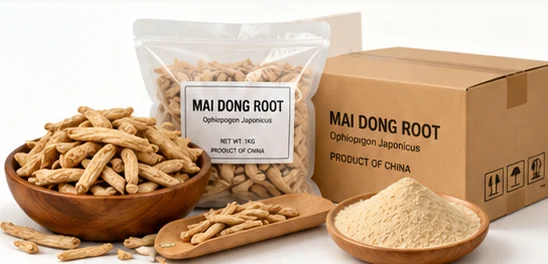
Use-Case Overview
Healthcare ingredient sourcing often begins with a raw herb inquiry but quickly expands into internal questions about processing fit, documentation expectations, specification alignment, and longer-term supplier stability.
This page helps frame Santai Maidong as a practical ingredient input conversation — connecting raw material supply with the commercial and regulatory realities of supplement, nutraceutical, and functional food manufacturing.
TL;DR
- Ingredient buyers need technical and commercial alignment.
- Specification clarity matters across procurement, quality, and R&D.
- Documentation and traceability matter as much as the raw material itself.
- The best route is the one the ingredient team can audit and repeat.
AI Summary
Healthcare ingredient sourcing for Maidong focuses on specification alignment, batch consistency, contaminant control, documentation, and regulatory fit. Buyers should compare the raw herb route with extract-input routes, confirm what each internal team needs, and request the documentation required for audits or downstream submissions. This page connects the ingredient route to product, quality, certificates, and contact pages for practical sourcing.
How ingredient buyers source differently
Unlike TCM practitioners who evaluate herbs through traditional frameworks, or tea buyers who prioritize visual presentation, healthcare ingredient buyers approach Ophiopogon root through a technical procurement lens.
What ingredient buyers prioritize
| Priority | Why it matters |
|---|---|
| Chemical consistency | Extraction yield and active constituent profiles depend on predictable input |
| Specification alignment | R&D, quality, and procurement teams must reference the same material standard |
| Batch traceability | GMP and regulatory audits require documented supply chain records |
| Contaminant control | Heavy metals, pesticides, and microbial load limits are commercial requirements |
| Supply stability | Product formulations depend on consistent raw material availability |
Product forms for ingredient applications
Dried whole root (extract-grade)
- Suitable for in-house extraction operations
- Cost-optimized compared to premium dispensing-grade material
- Mixed-size roots acceptable for extraction purposes
- Key parameters: moisture, ash, heavy metals, pesticide residues
Extract raw material (powder or cut)
- Pre-processed for more consistent extraction input
- May be specified by particle size or mesh
- Moisture specification critical for powder stability
Specification sheet alignment
Ingredient buyers should confirm:
- botanical species: Ophiopogon japonicus (Thunb.) Ker-Gawl.
- plant part: tuberous root
- origin: Santai County, Sichuan
- processing: dried, sulfur-free where specified
- physical form: whole root, cut, or powder with particle size
See Dried Ophiopogon Root and Maidong Extract Raw Material.
Quality control for ingredient supply
Ingredient buyers typically require more extensive QC parameters than general wholesale buyers.
Core specification
- moisture content target
- total ash and acid-insoluble ash
- macroscopic and organoleptic identification
- foreign matter limit
Contaminant screening
- heavy metals: Pb, Cd, Hg, As
- pesticide residues: EU MRL or USP <561>
- sulfur dioxide: required for sulfur-free verification
- microbial: TPC, yeast/mold, E. coli, Salmonella, aflatoxins per specification
Batch documentation
- Certificate of Analysis per batch
- batch or lot number linked to harvest and processing records
- traceability from origin through processing
See Quality Control, Ophiopogon Root COA and Documents Guide, and Certificates.
Regulatory framework
Healthcare ingredient buyers operate in regulated environments. Key considerations:
United States (FDA)
- Dietary Supplement: 21 CFR Part 111
- ingredient identity testing required
- supplier qualification program expected
- FSVP for importers
European Union
- food supplement or novel food classification
- contaminant limits under EC 1881/2006
- pesticide MRLs under EC 396/2005
- traditional herbal registration where applicable
Other markets
- Canada: NHP regulations
- Australia: TGA listed or registered medicines
- Japan: Food with Functional Claims or quasi-drug classification
Buyers should share their regulatory framework at inquiry so documentation scope can be aligned.
Supplier qualification for ingredient buyers
Beyond general supplier evaluation, ingredient buyers should verify:
- quality system: documented quality procedures
- testing capability: in-house or third-party lab access
- change control: process changes communicated clearly
- audit readiness: can the supplier answer a questionnaire or audit?
- sample retention: retention samples kept for batch reference
What ingredient teams should ask before quote
- Which route are we sourcing for: extract, supplement, or functional food?
- Does the supplier have batch-level documents?
- Can they support the required contaminants standard?
- Can the packing survive GMP receiving and storage?
- Is repeat supply realistic at the same specification?
How to structure an ingredient sourcing inquiry
Channel: Healthcare ingredient / supplement manufacturing Product: dried whole root or extract raw material Botanical: Ophiopogon japonicus root — confirmed species Origin: Santai County, Sichuan Physical form: whole root / cut / powder with particle size specification Quantity: trial / monthly volume / annual program Quality requirements:
- moisture target
- heavy metals limit
- pesticide residue standard
- sulfur requirement
- microbial limits Documents: COA, heavy metal report, pesticide report, phyto, CO Regulatory framework: FDA 21 CFR 111 / EU / other Packing: bag or carton with liner Destination: country
Send your brief through the Contact page with “Ingredient sourcing inquiry” noted.
Why this route matters commercially
Ingredient programs usually scale best when the supplier can keep the same batch language, document format, and packing style over time. That reduces internal review time and makes repeat orders easier to approve.
FAQ
What makes an ingredient supplier different from a normal wholesale supplier?
Ingredient buyers need more rigorous documentation, traceability, and specification discipline.
Should R&D be involved in the inquiry?
Yes. Ingredient sourcing usually touches procurement, quality, and technical teams.
Is dried whole root enough for every ingredient program?
Not always. Some programs need cut or powder input with tighter specification.
What is the best next step?
Send the route, document needs, and regulatory framework through contact.
Related pages
Buyer TypeHealthcare ingredient buyers, botanical sourcing teams, nutraceutical product developers, supplement manufacturers, and functional food R&D groups evaluating Chinese herbal raw materials for product formulation.
Sourcing FocusThis channel often needs cleaner cross-functional communication on grade, packing, origin, and batch detail because both technical and commercial teams review the material. Specification alignment across procurement, quality, and R&D departments is critical.
Logistics FocusConsistent bag weights, liners, labeling, and lot traceability become more important when materials move into GMP or broader ingredient handling systems. Documentation must support downstream quality audits and regulatory submissions.
Application Buyer Brief
Share the end use, quantity range, packing style, and destination market so we can match the right MAI DONG ROOT page and grade.
Healthcare Ingredients
Use case
Packing need
Volume range
Cross-team clarity
The product page structure helps technical, quality, and purchasing teams discuss the same raw material using the same specification fields.
Scalable catalog logic
The architecture supports expansion into extract input, documentation-rich ingredient pages, and specification-based procurement.
Batch consistency priority
Ingredient manufacturers need predictable raw material input; origin-anchored supply reduces chemical profile variability.
Regulatory readiness
COA parameters, heavy metal screening, pesticide residue testing, and traceability records are structured for downstream regulatory support.
Packaging & Shipping Considerations
Consistent bag weights, liners, labeling, and lot traceability become more important when materials move into GMP or broader ingredient handling systems. Documentation must support downstream quality audits and regulatory submissions.
Recommended Product Fit
Sichuan, China
MOQ 300 KG
Dried Ophiopogon Root
Dryness-focused export grade for buyers comparing storage stability and route-ready packing.
Dried Export Grade
Lead 7-12 days
Moisture
Reviewed to support stable transport and storage performance
Size Grade
Commercial, cleaner selected, or destination-oriented grade according to inquiry
Packaging
Bulk sacks, lined kraft bags, cartons, or palletized shipping format
Sichuan, China
MOQ 500 KG
Maidong Extract Input Material
Prepared extract-input structure for industrial ingredient and processing inquiries.
Extract Raw Material
Lead time by brief
Moisture
Batch confirmed before dispatch
Size Grade
Commercial industrial input grade to be confirmed
Packaging
Bulk sack, kraft bag, or palletized industrial format
Support Path
Quality Control
A detailed trust page covering intake review, sorting standards, moisture control, impurity management, batch documentation, and shipment preparation for commercial Ophiopogon root supply.
Support Path
Packaging & Shipping
A logistics-focused page for buyers comparing bag formats, protective packing, pallet methods, and export coordination.
Support Path
Contact MAI DONG ROOT Supplier | Bulk Ophiopogon Root Inquiries
A conversion-focused inquiry page for importers, wholesalers, and herbal raw material buyers.
Export-Ready Supply
Ready to Discuss Your Inquiry?
Share your required grade, target quantity, destination market, and packing preference. We will reply with a practical commercial recommendation.